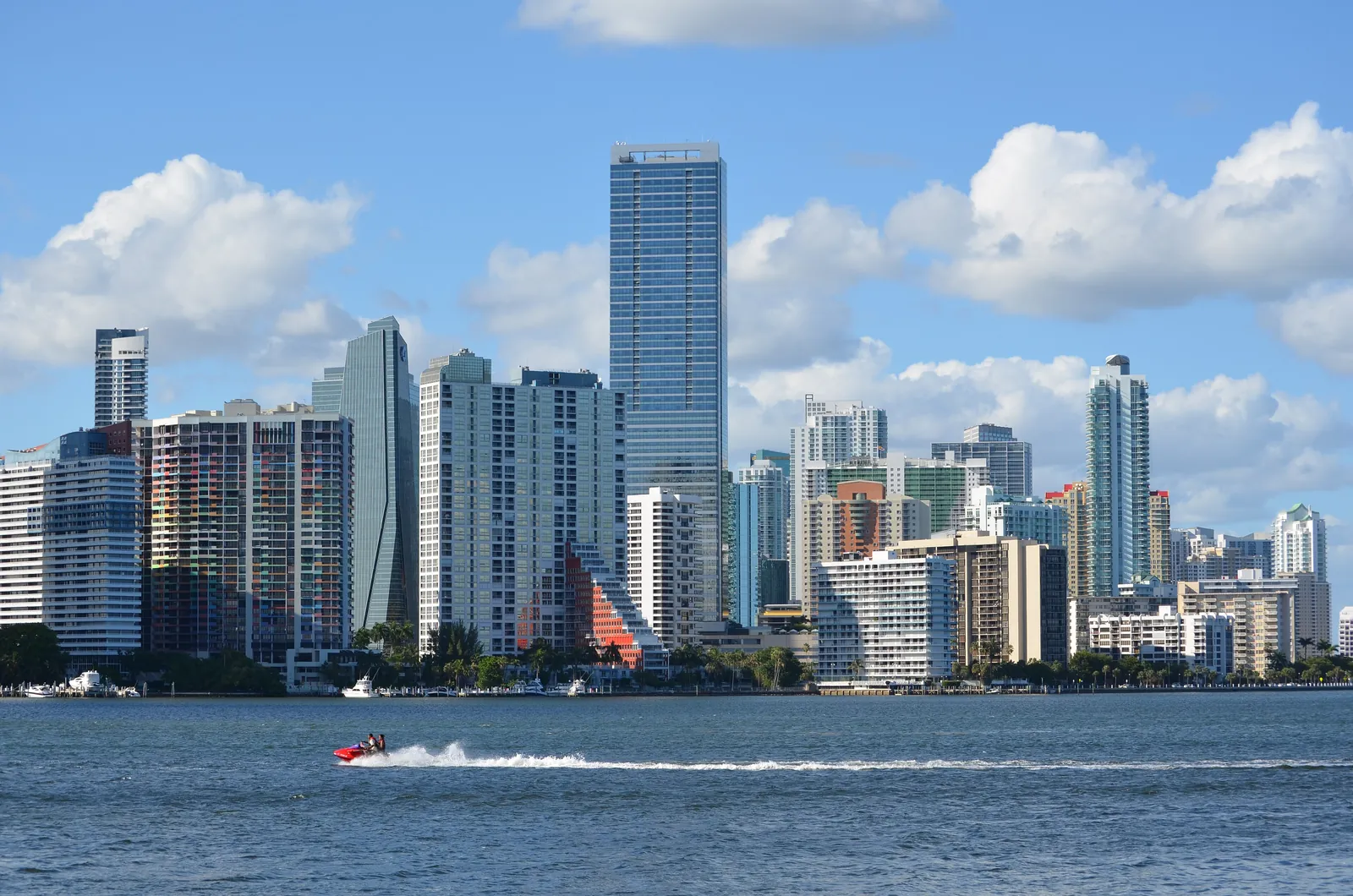
Few cities have changed shape as quickly as Miami. Once known above all for its beaches and Art Deco hotels, it now has one of the most dynamic residential skylines in the United States, where glass towers line Biscayne Bay and the Atlantic, and luxury brands lend their names to the addresses themselves.
In barely a generation, Miami has moved from a resort city to a vertical one. Downtown and Brickell have filled with high-rise condominiums, Edgewater has grown along the bay, and the barrier islands of Miami Beach and Sunny Isles Beach now carry a line of towers facing the ocean. What sets the newest of them apart is not only height, but identity: many are designed and marketed with the name of a carmaker, a jeweller or a hotel group, promising a recognisable way of life from the lobby to the terrace.
Behind the façades, these residences share the same challenges: tropical heat and humidity, salt air, intense sun, hurricane-season rules and open-plan interiors wrapped in glass. Furnishing them well is a craft in its own right.
Why Miami builds high
Several forces explain the city’s vertical growth. The first is international demand. Miami has long been a gateway between North America, Latin America and Europe, and its residential towers attract buyers who want a waterfront home, a second residence or a base in the United States, often with services that make the apartment easy to leave and return to.
The second is taxation. Florida levies no state personal income tax: Article VII, Section 5 of the Florida Constitution prohibits it for individuals. Federal taxes still apply, and every buyer’s situation is different, but the absence of a state income tax is widely cited as one reason wealthy households relocate to the state.
The third is the water itself. Between Biscayne Bay and the Atlantic, waterfront land is limited, and building upwards is the way to give as many residences as possible a view of the sea or the bay. Each district offers a different expression of that idea:
- Brickell and Downtown: the financial heart of the city, with dense towers along the bay and the Miami River.
- Edgewater: a bayfront neighbourhood north of Downtown, increasingly residential.
- Miami Beach: from South Beach to the quieter northern stretches, combining historic buildings with contemporary oceanfront residences.
- Sunny Isles Beach: a narrow strip between the ocean and the Intracoastal Waterway, known for its row of oceanfront condominium towers.
Key facts
- Tallest projectWaldorf Astoria Hotel & Residences · 317 m · completion expected 2028
- Completed in 2024Aston Martin Residences · 66 floors · 250 m
- Car lifts to the apartmentPorsche Design Tower · 60 floors · 2017
- Under constructionBentley Residences · 216 residences · expected 2028
- State income taxNone for individuals in Florida
- Atlantic hurricane seasonJune 1 to November 30
Figures as published at the time of writing (October 2026). Heights from the CTBUH Skyscraper Center.
The rise of branded residences
A branded residence is a building developed in partnership with a luxury name, which shapes its design, its services or both. In Miami, the concept has spread from hotel groups to fashion, jewellery and, most visibly, the automotive world. Among the city’s tallest projects listed by the CTBUH Skyscraper Center are towers carrying names such as Waldorf Astoria, Cipriani, Baccarat, Aston Martin and Mercedes-Benz.
Waldorf Astoria Hotel & Residences, Downtown
Rising in a sequence of stacked, offset volumes, the Waldorf Astoria Hotel & Residences is set to become Miami’s first supertall building. The CTBUH lists it at around 317 metres, across roughly 100 storeys combining a hotel and private residences. At the time of writing the tower is still under construction, with completion expected in 2028.
Aston Martin Residences, Downtown
At 300 Biscayne Boulevard Way, the Aston Martin Residences rises 66 storeys and about 250 metres on the waterfront. Completed in 2024 after nearly a decade of development, it houses several hundred condominiums whose interiors and amenities draw on the design language of the British carmaker.
Porsche Design Tower, Sunny Isles Beach
Completed in 2017, the 60-storey Porsche Design Tower made headlines for its patented car lifts, which carry residents seated in their cars up to garages beside their apartments. Developed by Dezer Development, it remains one of the most cited examples of how a brand can reshape the very organisation of a building.
Bentley Residences, Sunny Isles Beach
The same developer is now building the Bentley Residences with Bentley Motors. The oceanfront tower is planned for 216 residences with glass-enclosed sky garages served by car lifts, and completion is expected in 2028.
For residents, the brand is more than a logo. It sets expectations for materials, service and attention to detail. Inside the apartment, however, owners usually want something more personal than the brand’s showroom: an interior that reflects how they live.
What defines a luxury tower residence
In Miami as elsewhere, a handful of features distinguish a true luxury tower:
- Hotel-style services. Concierge, valet parking, housekeeping and in-residence dining, sometimes provided by the hotel brand itself.
- Private lifts. Lifts opening directly into the residence, and in some buildings car lifts serving private garages.
- Pools and wellness. Pool decks, spas, fitness centres and beach services on oceanfront sites.
- Marinas and water access. On the bay or the Intracoastal Waterway, some buildings offer boat slips or easy access to marinas.
- Security. Controlled access, staffed lobbies and limited residences per floor.
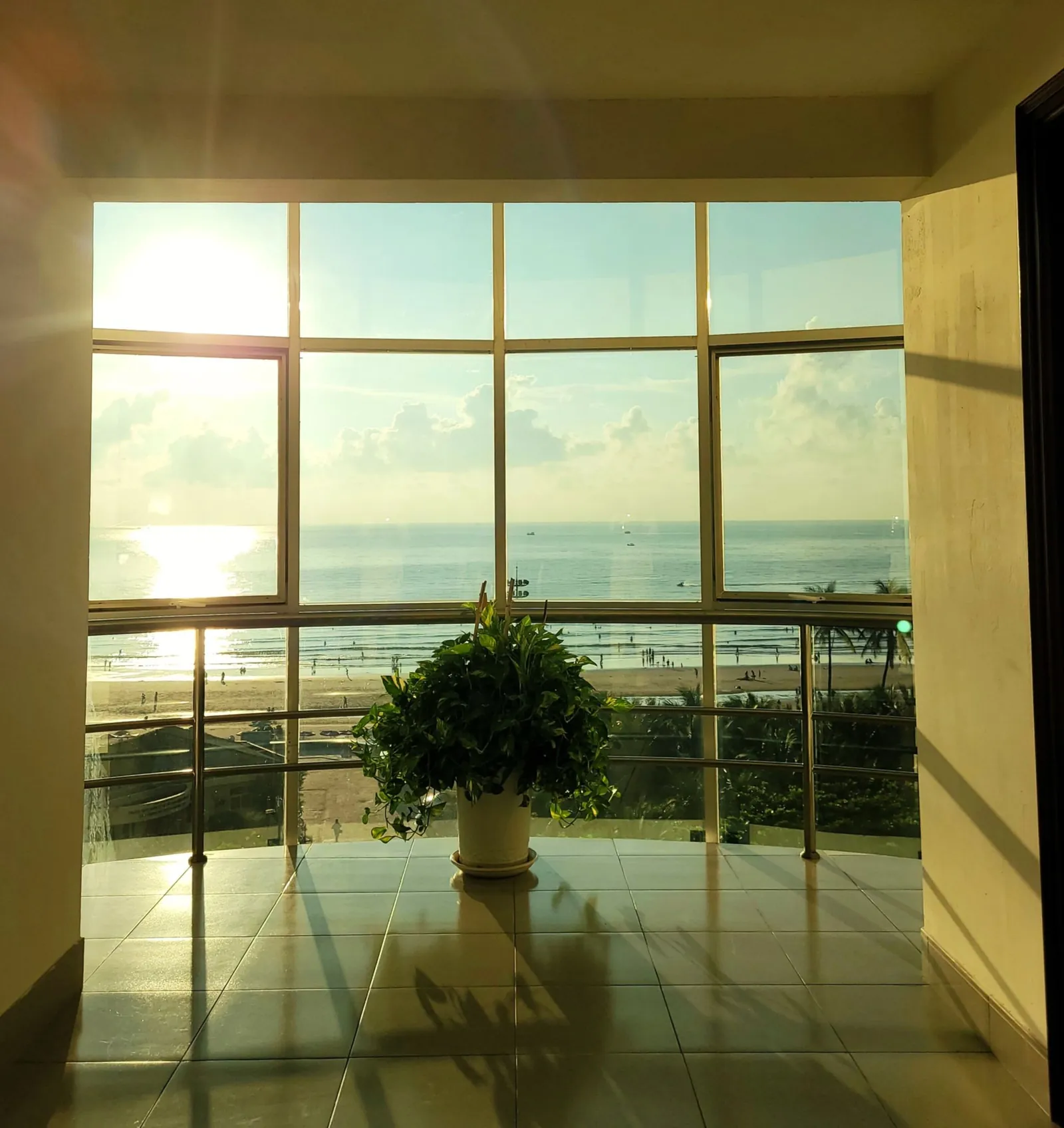
- Glass and views. Floor-to-ceiling glazing and deep balconies oriented towards the water.
Furnishing a waterfront high-rise
A tower apartment on Biscayne Bay or the Atlantic is one of the most demanding settings for furniture. The climate, the building and the distance from European workshops all shape the project.
Heat, humidity, salt and sun
Miami’s climate combines heat, high humidity and salt-laden air, while glazing lets in strong sunlight for much of the year. Indoors, constant air-conditioning creates a contrast that can stress solid wood and veneers, so stable constructions, well-sealed finishes and carefully selected timbers matter. Fabrics and leathers are chosen for their resistance to UV and fading. Outdoors, dense woods such as teak, marine-grade aluminium and stainless steel, stone or ceramic tops, solution-dyed fabrics and quick-dry foams are the reference materials.
Balconies, terraces and hurricane season
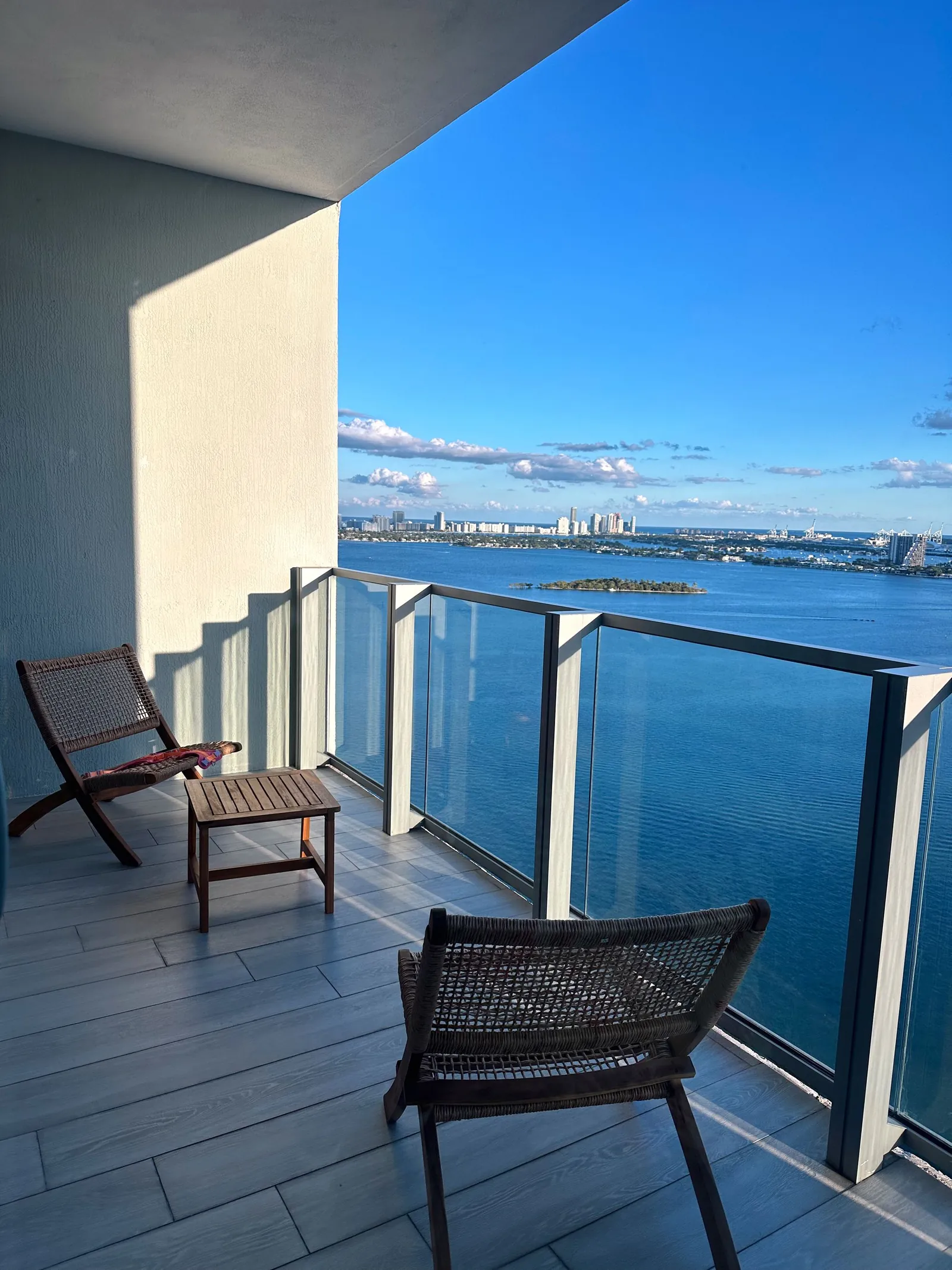
The Atlantic hurricane season runs from June 1 to November 30. Many condominium associations have rules about what may stay on balconies and terraces, and often require residents to bring in or secure outdoor furniture and loose items when a storm approaches. Rules vary from building to building, so they should be checked with the association before outdoor pieces are designed. In practice, this favours furniture that is easy to move and store, cushions that can be removed quickly, and heavier pieces planned with fixing points or indoor storage in mind. Our outdoor furniture service is built around these constraints.
Logistics: from Europe to the 50th floor
Bespoke furniture made in Europe travels a long way before it reaches a Miami tower. Pieces are designed to be crated safely, shipped and cleared, then delivered within the windows set by the building. Most towers require advance booking of the service lift, protection of common areas and insurance documentation from the delivery team. Lift and door dimensions are surveyed at the design stage, and large items such as sofas, dining tables or headboards can be made in sections that are assembled invisibly on site.
Bespoke for open plans and walls of glass
Miami’s towers often feature open-plan living spaces wrapped in glazing, with few solid walls to anchor furniture. Bespoke pieces solve this: island sofas finished on every side, low sideboards that do not block the view, joinery that integrates media and storage, and dining tables sized to the room rather than to a catalogue. Our residential furniture service designs each piece for the exact space it will occupy.
Miami among the world’s tower capitals
Like Monaco, Dubai or the residential towers of Tel Aviv, Miami attracts international buyers looking for views, services and security. Each city has its own character. Monaco offers scarcity and discretion on a tiny territory, as we explored in our article on luxury residential towers in Monaco; Dubai has turned height into a signature; Tel Aviv has seen a new generation of towers rise along its coast. Miami’s distinctive contribution is the branded residence, combined with a resort-like relationship to the water, where the balcony, the pool deck and the marina are part of daily life.
For owners who move between these cities, expectations converge: craftsmanship, materials that age well in demanding climates, and interiors that feel personal rather than generic.
The SOLIA approach

SOLIA is a European house that designs and manufactures high-end bespoke furniture for private villas, residences, luxury hotels, restaurants and outdoor spaces. Our pieces are made in partner workshops in France, Italy and Portugal and shipped for international projects. Our method follows four steps:
- Project brief. We study plans, views, the building’s rules and access routes, and how you intend to live in the residence.
- Design and development. Drawings, materials and samples are developed with you, your architect or your interior designer, with each piece sized for its space and its journey.
- Manufacturing. Cabinetmakers, upholsterers and stone and metal specialists in France, Italy and Portugal craft every piece.
- Delivery and installation. We organise crating, international shipping, delivery within the building’s rules and on-site assembly.
Discover our services, learn more about SOLIA, or browse our projects to see how we work with residences, hotels and outdoor spaces.
Frequently asked questions
Yes. SOLIA designs and manufactures bespoke furniture in France, Italy and Portugal and organises international shipping, delivery and installation. Each project is planned with crating, transport, import formalities and building access in mind from the design stage.
Lead times depend on the number of pieces, the materials and finishes chosen, and transport to the destination. A schedule is confirmed once drawings and samples are approved, and it is built backwards from the date the residence must be ready, including shipping and installation.
Heat, humidity, salt air and strong sunlight call for stable, well-sealed materials: dense outdoor-grade woods such as teak, marine-grade aluminium or stainless steel, stone and ceramic tops, solution-dyed fabrics and quick-dry foams outdoors. Indoors, finishes and fabrics are chosen for UV resistance and dimensional stability in air-conditioned rooms.
Yes. Most towers have their own rules for deliveries, service-lift reservations, insurance certificates and work hours, and many also set rules for balcony furniture during hurricane season. These requirements are gathered at the brief stage and built into the design and delivery plan.
Furnishing a residence in Miami?
Tell us about your apartment, its views and its building. Our team will come back to you with a first approach.